Posts Tagged ‘David Abram’

The Entangled Human: Health & Resiliency

October 12, 2009

We are indeed social beings whose well being and resilience is entangled with our human community. Excerpted below are two recent and interesting articles from  Scientific American that speak to the value of social connectivity. Is it not  naive however, to assume such social connectivity to the other than human world is any less vital to our well being and resiliency?
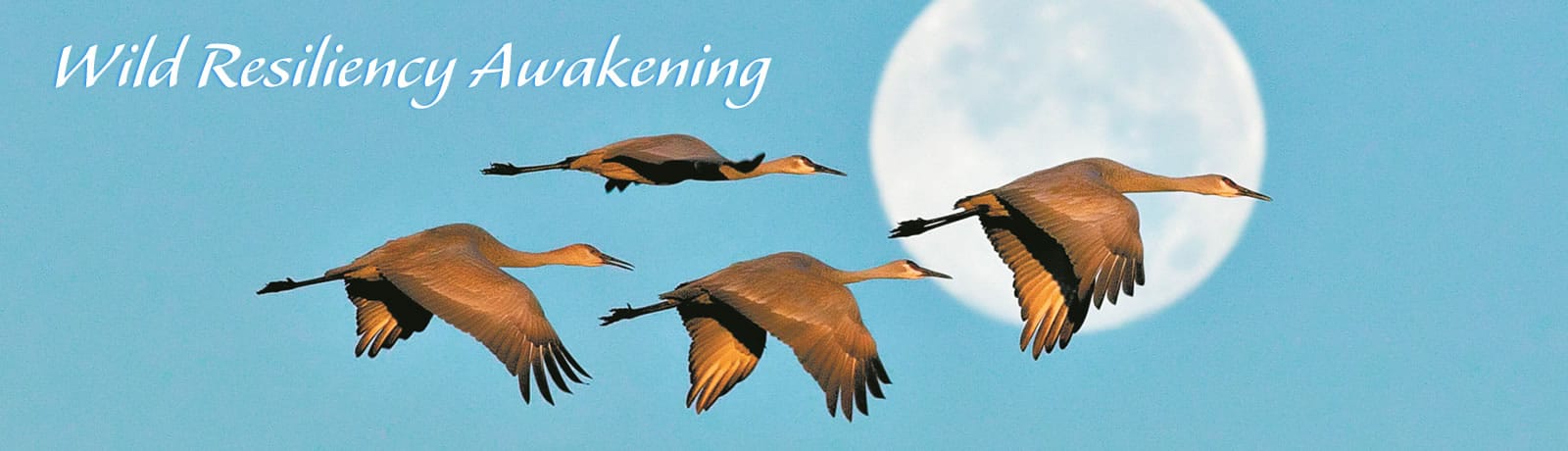
Here is David Abram on this, from his essay, Speaking with Animal Tongues:

We still need that which is other than ourselves and our own creations. We are human only in contact, and conviviality, with what is not human. . . .

Groups as Therapy?–Socializing and Mental Health
Membership in lots of groups–at home, work, the gym–makes us healthier and more resilient…

Membership in a large number of groups was once thought to be detrimental because it complicated our lives and caused stress.

Now, however, research shows that being part of social networks enhances our resilience, enabling us to cope more effectively with difficult life changes such as the death of a loved one, job loss or a move.

Not only do our group memberships help us mentally, they also are associated with increased physical well-being.

When the Economy Is in the Red, Are People Really in the Pink?
A recent study finds that economic expansion could be worse for your health than a downturn, revealing a possible upside to today’s recession

Unemployment reached 23 percent and the GDP shrank by as much as 14 percent, so it’s hard to imagine a silver lining to the tumultuous years of the Great Depression. But could the general health of the U.S. population actually have improved when the nation’s economic fitness took multiple nosedives? And, if a floundering economy improves longevity, what does this say about our current recession?

It turns out that the bleakest years of the Great Depression, as gauged by GDP and unemployment rate, saw the greatest gains in life expectancy and drops in mortality rates. And during the years that the economy perked up, the nation paid the price in terms of health, according to a study published last week in the Proceedings of the National Academy of Sciences…

…social support has slipped in recent history. For one, the average size of the U.S. household is smaller now than in the 1920s and ’30s. Also, a 2006 study in American Sociological Review found that the average person now has a smaller number of people in whom they could confide than folks typically did 20 years ago. Greater isolation among U.S. citizens could make us more vulnerable to economic stresses, and thereby to greater peaks and valleys in health, Tapia says, citing a body of research showing that people who are integrated in their communities tend to enjoy a greater degree of protection against premature mortality.

Surely, as we open to and re-member the larger social networks of Life out of which we arise and are embedded within… our well being and resilience will respond with the reciprocity that all life is woven of.

Intelligence in Nature: Clever Ravens followup

July 21, 2007

Following up here as an earlier post on Intelligence in Nature, my friends at The Fat Finch: Bird Brain Blog are doing an interesting series on Crows and Ravens that is worth checking out. The short video clips in part I & part III are particularly astounding. The first clip shows a raven not only using cars to ‘crack open a nut for food,’ but also… well, you really should see it for yourself. And the clip in part III shows a raven problem solving and making a tool!

Back when I went to school, we learned tool making was what distinguished humans from… well, you know, the lower and lesser life forms: animals! Indigenous cultures have usually seen it differently however; all creatures are perceived as people, just people of a different form, and so also deserving of respect and honor… part of the family.

A friend who is apprenticing himself to plants and herbs came back from a hike inDatura Flower the mountains one day, from his adventure into this journey of learning, and called me to exclaim. “It’s amazing if you sit with a plant like it was a human and introduce yourself and… listen!”

On our journey of learning into envisioning a world beyond sustainability, into reinventing what it is to be a human being, surely a part of that will be to again identify our core self and nature with the world of nature itself, indeed with the mystery and wonder of the cosmos out of which we have arisen and in which we exist.

If a quality of people intelligence is to be able to flexibly perceive the world from multiple perspectives, then the indigenous world view below expresses it. It is also an expression of the human as not separate from nature but as integral with/in nature. Words and thoughts become powerful tools of intention in such a world — beyond sustainability.

In the very earliest time, when both people and animals lived on earth,
a person could become an animal if he wanted to
and an animal could become a human being.
Sometimes they were people and sometimes animals and there was no difference.
All spoke the same language.
That was the time when words were like magic.
The human mind had mysterious powers.
A word spoken by chance might have strange consequences.
It would suddenly come alive and what people wanted to happen could happen – all you had to do was say it.
Nobody could explain this.
That’s the way it was.

Nalungiaq, an Inuit woman interviewed by Knud Rasmussen early in the 1900’s (source: The Spell of the Sensuous: Perception and Language in a More-than-Human World by David Abram)